
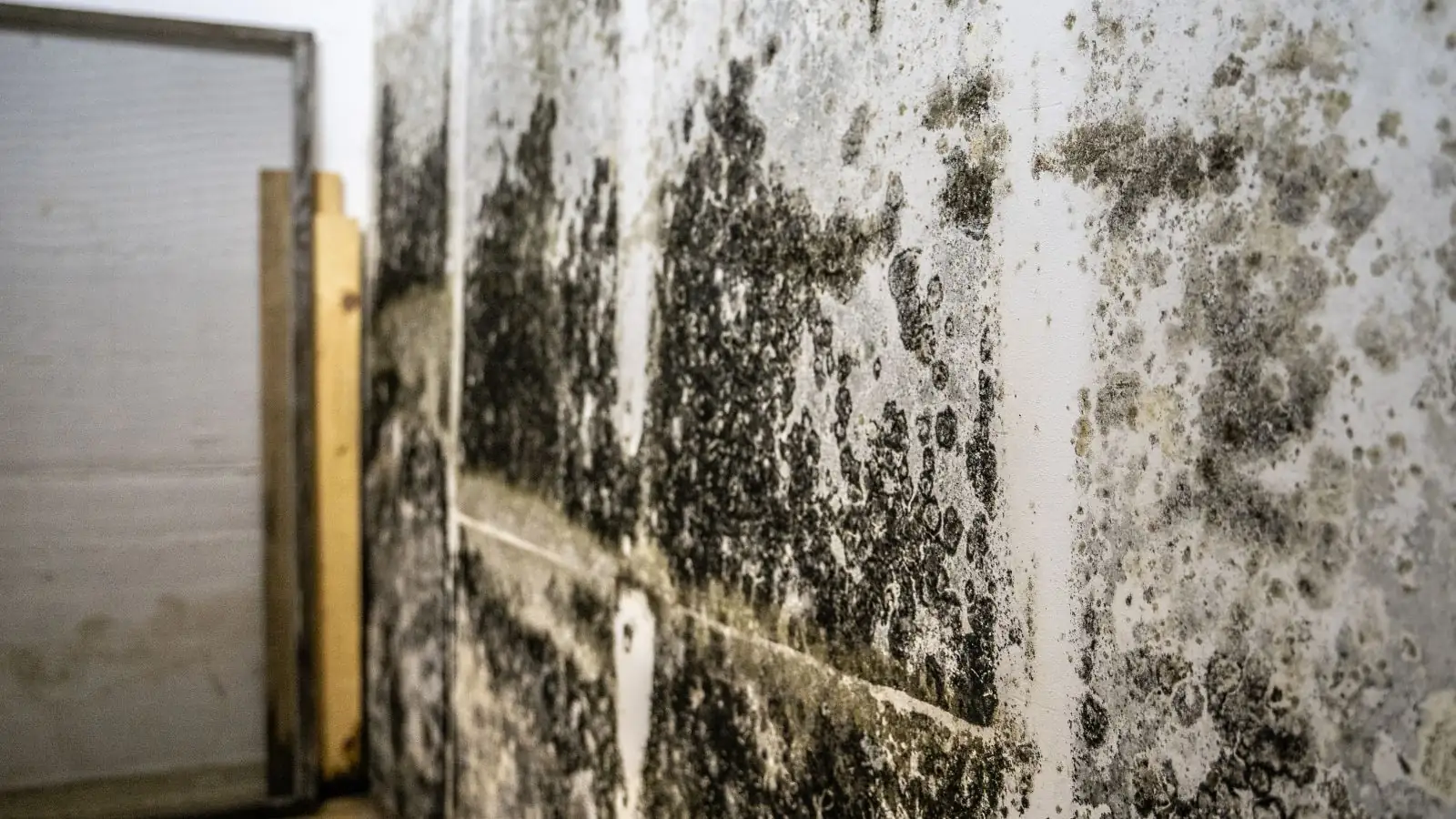
Why low spaces grow mold in Grapevine, TX homes
Mold control in a basement starts with water, not with the mold itself. Low areas collect moisture from three directions: groundwater pushing against walls and slabs, plumbing and appliance leaks that drain downward, and humid air that condenses on cool surfaces. Any one of them can keep a space damp enough for growth.
A home does not need a basement to have the problem. Crawl spaces, garages, laundry rooms, water heater closets and the first few feet of walls along a slab all behave the same way. The steps below work in each of them.
Mold needs moisture, an organic food source such as drywall paper, wood, cardboard or insulation, and time. Remove the moisture and the other two stop mattering.
Find where the moisture comes from
Treating stains without finding the source gives you a clean wall for a few weeks. Walk the space with a flashlight and check these three paths.
Water from outside
Look for staining or mineral crust low on walls, damp spots after rain and soil that slopes toward the foundation. Gutters that dump beside the house and downspouts that end at the wall are common culprits. Window wells and garage door thresholds are other entry points.
Water from plumbing and equipment
Check water heaters, washing machine hoses, sink traps, softener lines and AC condensate drains. A slow drip adds up over weeks. A moisture meter or a thermal imaging camera can trace wetness behind finished walls that you cannot see.
Water from the air
Humid summer air condenses on cold ducts, pipes and slab surfaces. Insulated walls with no airflow trap that dampness. A simple hygrometer shows whether indoor humidity stays high, and sustained readings above 60 percent invite growth.
Steps to control a damp lower level
Do these in order. Skipping to cleanup first is the mistake that sends people back to the same wall a month later.
- Stop active leaks and fix the source, or have a plumber do it.
- Remove standing water and wet porous items such as cardboard boxes, carpet and stored fabric.
- Run a dehumidifier sized for the space and keep doors to the area closed so it works efficiently.
- Move stored items off the floor onto shelves, and leave a gap between boxes and walls.
- Clean small hard-surface patches with detergent and water, then dry them fully.
- Recheck humidity weekly for a month. If readings climb again, the source is not fixed.
Porous materials that stayed wet for several days are usually removed and not cleaned. Carpet pad, insulation and soaked drywall fall into that group.
Safety first
Do not step into a flooded lower level if water is near outlets, a panel, a furnace or a water heater. Call the utility or 911 for any electrical or gas concern before calling a restoration line. Shut off power at the panel only when you can reach it without wet floors, and stay out entirely if the water may include sewage.
Damp space you cannot dry?
A crew can map moisture and set equipment so you stop guessing.
Grapevine local note: check your flood risk before you assume
Grapevine Lake sits on the city's north side, and standard home policies exclude flood damage. If you live near the lake or a creek and see water seeping into a low area after heavy rain, flood coverage is a separate policy and it matters. Look up your address on the FEMA Flood Map Service Center, then ask your insurer or agent what you have.
Do this before the next storm and not after. Ask whether a waiting period applies before coverage begins. Mold that follows flooding is treated as flood damage, so the answer decides who pays for cleanup.
Common mistakes in damp lower spaces
The most frequent error is storing cardboard boxes directly on a slab. Cardboard wicks moisture and feeds growth, so a plastic bin on a shelf is safer. Another is closing a damp room off and forgetting it, which lets humidity build with no airflow.
People also run a fan in a room where the air is more humid than the surface being dried. That just moves wet air around. A dehumidifier with the door closed does more, and a crew uses LGR dehumidifiers and air movers together for the same reason.
Finally, avoid spraying fog products or scrubbing dry growth with a dry brush. Both can spread spores to clean areas. If the patch is more than a small spot, stop and get it assessed.
When to call a professional
Call when growth covers a larger area, when materials are soaked through, when the musty smell returns after drying or when you cannot find the source. The published standard for mold work is ANSI/IICRC S520, which calls for containment, HEPA air filtration and controlled removal.
Our mold remediation service follows those practices, and our water mitigation team can dry the structure first. If the cause is flooding, see flood damage restoration for how that work differs. Crews also head to Flower Mound and Coppell from Grapevine.
Low-space mold questions in Grapevine
Yes. Crawl spaces, garages, laundry rooms and utility closets all sit low and hold humidity. The same moisture sources apply, so the same steps work.
It controls humidity but it does not remove existing growth or fix a leak. Use it after the source is repaired and wet materials are out. Keep it running while readings stay above the target range.
Most guidance suggests keeping indoor humidity in the 30 to 50 percent range, and growth becomes more likely when it stays above 60 percent for long periods. A hygrometer costs little and shows trends over days.
Paint over a wet wall traps moisture and peels. Fix the source, dry the wall and confirm readings with a meter before you coat anything.
Standard homeowners policies generally do not cover floods. Sudden and accidental plumbing losses are often covered, but check your policy and ask your insurer about separate flood coverage.
Use the FEMA Flood Map Service Center to look up your address, then ask your insurer or agent about flood coverage. The lake sits on the city's north side, so homes there should check early. The contact page lists how to reach us if you need drying help after water gets in.