
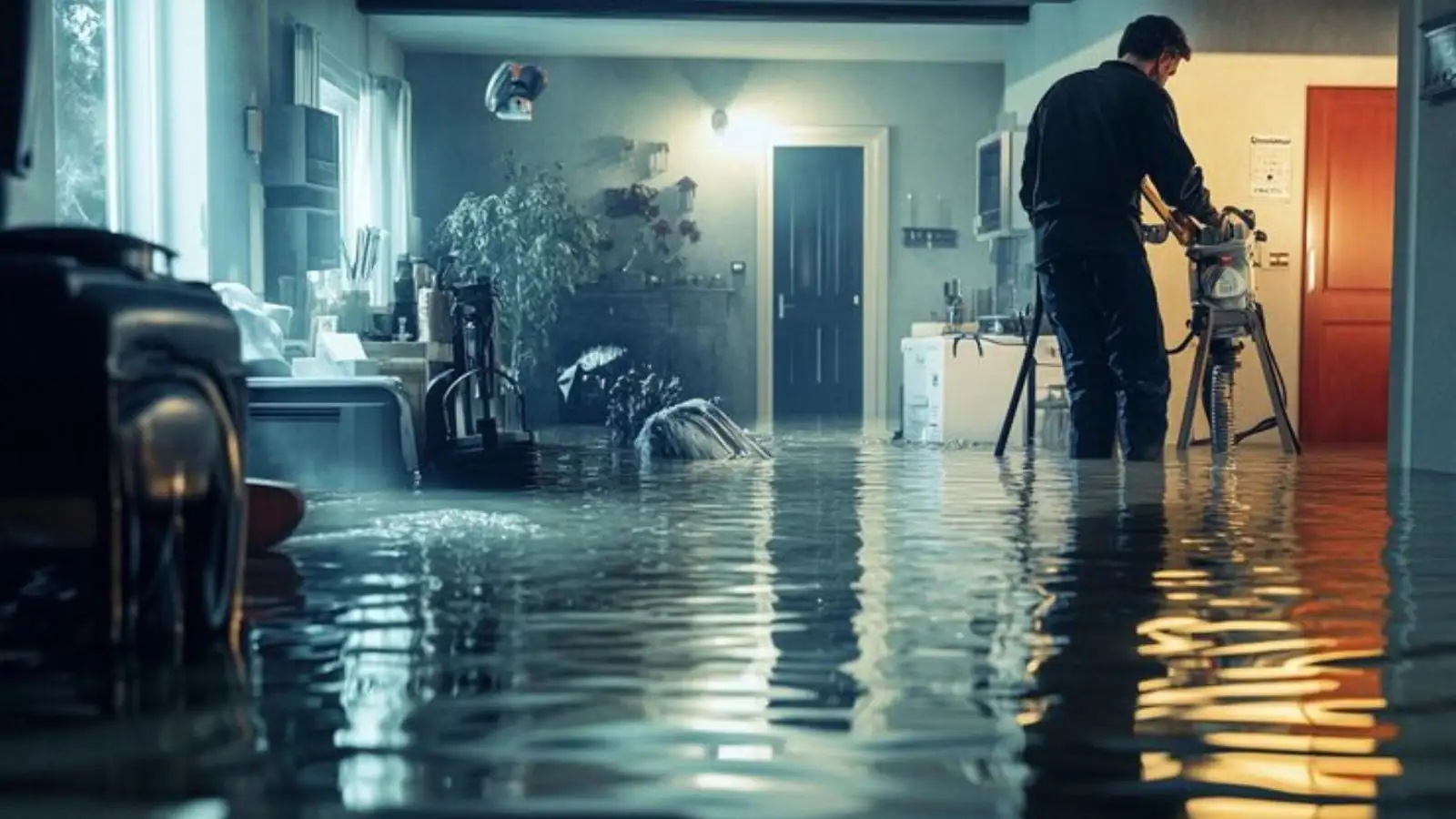
Water mitigation in Grapevine, TX starts with urgency
If water is spreading through a Grapevine home right now, treat it as an emergency. Our line is answered 24/7, and the first call is where mitigation begins. While a crew is arranged you can shut off the main water valve, turn off power to wet areas only if the panel is dry and safe to reach, lift valuables off the floor and keep people and pets out of dirty water.
Mitigation is not the same as repair. It is the damage-control phase: find the source, remove the water, take out materials that cannot be saved and dry the rest. Rebuilding drywall, flooring and paint comes later, once readings show the structure is dry.
When water damage becomes an emergency
Some losses can wait until morning, and some cannot. Water that is still flowing, a ceiling that is bulging, wet insulation, soaked carpet pad or any water near outlets and the electrical panel all need a response the same day.
Wet drywall and pad act like sponges. Moisture climbs a wall, spreads under baseboards and settles into the subfloor, so a puddle that looks small can hide a much larger wet area. The Texas Department of Insurance notes that mold can start growing within a day after a leak, which is why waiting for a convenient time costs more than it saves.
What to do while you wait for the crew
These steps cost nothing and reduce the damage.
- Shut off the main water valve or the valve nearest the leak.
- Do not enter a room with wet outlets or a wet panel, and call the electric utility or 911 for any electrical risk.
- Move valuables and electronics off wet floors.
- Do not use a household vacuum on standing water.
- Photograph and video every wet area.
What a mitigation crew does on site
The sequence is the same on most jobs, with the details set by the water category and the materials involved.
- Stop or isolate the source, such as a failed supply line, a leaking water heater or a clogged condensate drain.
- Extract standing water with portable or truck-mounted extraction units.
- Map moisture with meters and a thermal imaging camera to find water behind walls and under floors.
- Remove materials that cannot be dried safely, often carpet pad, saturated insulation and wet drywall.
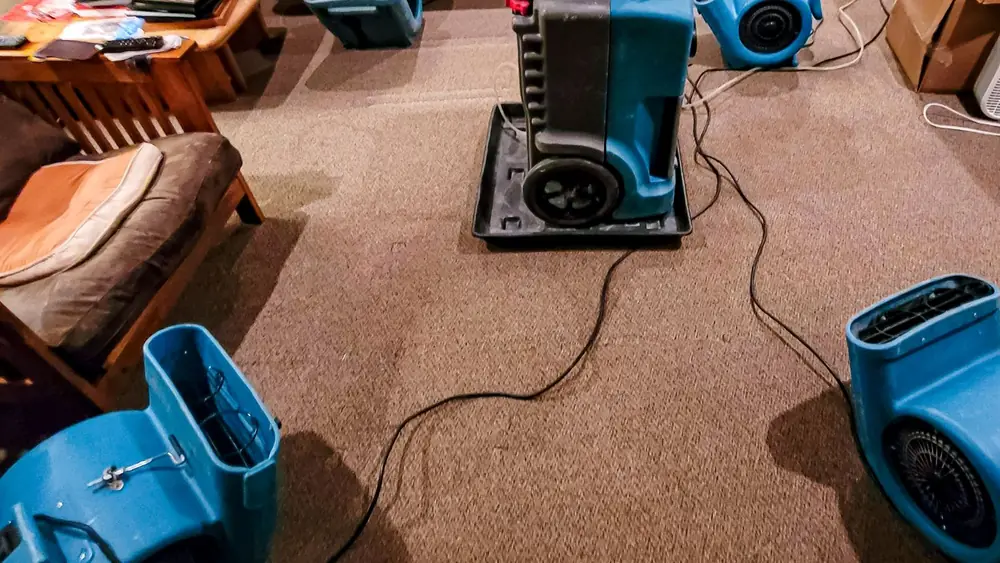
- Set air movers and dehumidifiers, usually LGR units, and tent or seal the area when it helps airflow.
- Return on a schedule to re-read moisture and adjust equipment until the structure tests dry.
Photos and written moisture readings are taken along the way. Those records matter if you file an insurance claim.
Structural drying: how long it takes and why
Structural drying is the part of mitigation that takes patience. Air movers push air across wet surfaces, dehumidifiers pull the moisture out of the air and the crew checks readings at each visit. Drying commonly takes several days, and dense materials such as hardwood, plaster and framing take longer than carpet or drywall.
Homeowners sometimes ask about renting air movers and dehumidifiers and running them alone. We do not offer rentals. Where the equipment sits and how long it runs decide whether a wall actually dries, and guessing leaves moisture in places a meter would have found.
Talk to a dispatcher about your loss
Describe the source and the rooms involved. We explain the scope and price before work starts.
If you only see symptoms and not a source
Most people do not search for water mitigation. They search for a ceiling stain that keeps spreading, a musty smell in a room, carpet that feels damp for no reason or a wall that feels cool and soft. Those are symptoms, and each one means water is still going somewhere.
A stain that grows after the rain has stopped, a floor that squishes near a bathroom or a water bill that jumps with no change in use points to a hidden leak. Mitigation finds that water, stops it and dries what it touched before the damage reaches framing. For the rebuild that follows, see water damage repair.
Mitigation or something else?
Matching the situation to the right service saves time on the first call.
| What you see | Likely need | Where to read more |
|---|---|---|
| Water still flowing or standing | Extraction and mitigation now | Emergency water removal |
| Water stopped, rooms soaked or contaminated | Debris removal, sanitizing and deodorizing | Water damage cleanup |
| Creek, lake or storm flooding | Category 3 handling and removal | Flood damage restoration |
| Dry structure, damaged finishes | Rebuild and refinish | Water damage repair |
| Musty odor or visible growth | Mold assessment and removal | Mold remediation |
What changes the cost of mitigation
Mitigation pricing depends on five things: the water category, the size of the wet area, the materials involved, how many days drying equipment runs and how much has to be torn out. Clean water from a supply line costs less to handle than sewage or flood water.
We do not quote blind. Scope and price are explained before work starts, and you can ask what each line covers. Want your real number? Describe the loss when you call.
Insurance and documentation
Coverage usually depends on whether the loss was sudden, and policies frequently exclude gradual leaks and flooding. Confirm with your insurer. Report the loss as soon as possible, photograph everything before it is moved and keep damaged items until the adjuster has seen them, as the Texas Department of Insurance advises.
Mitigation records such as dated photos, moisture readings and equipment logs give your adjuster something concrete to review. We do not promise how a claim will be decided.
Mitigation across Grapevine and nearby towns
Crews dispatch from Grapevine and work along the SH 114, SH 121 and SH 26 corridors. The same mitigation process applies in Colleyville and Southlake, where many calls involve supply lines and appliance failures, and in towns to the east and north. Humid Texas summers also push air conditioner condensate lines to overflow, and wet insulation above a ceiling is a common mitigation job once the line backs up.
Water mitigation questions in Grapevine
Yes. The line is answered 24 hours a day, every day. Same-day response is offered when crew availability allows, and we never promise a fixed arrival time. If you reach the shutoff safely, closing it while you wait limits the damage.
Mitigation stops the damage and dries the structure. Restoration, also called repair or rebuild, replaces the finishes that could not be saved. Mitigation comes first, and doing it fast usually shrinks the rebuild.
Moisture meters compare wet areas to dry reference readings in the same materials. Crews record readings each visit and remove equipment only after the materials reach dry standards, not when a surface feels dry to the hand.
Often yes. A stain means water has reached the ceiling material, and a hidden source may still be active. Photograph it, shut off water to nearby fixtures if you can and call so the source and the wet insulation above can be checked.
Several days is common, and dense materials take longer. The number depends on the water category, the materials and the readings each visit, so we adjust equipment instead of using a fixed schedule.