

When flood water in your Grapevine home is an emergency
Flood water is different from a leak because it carries whatever it crossed on the way in: soil, yard chemicals, runoff and sometimes sewage. Treat it as unsafe until proven otherwise. Calls are answered at any hour, and a crew is scheduled the same day whenever capacity permits.
While you wait, stay out of the water if outlets, appliances or the panel are wet and call the electric utility or 911 for any electrical risk before you call us. Do not walk through standing water to reach the panel. If you can reach it from dry ground, cutting power to the flooded area is reasonable. Keep children and pets away and wear boots and gloves for anything you must touch.
Why flooding is different in Grapevine
Grapevine sits beside Grapevine Lake, a flood control reservoir on Denton Creek that was authorized in 1945 and built between 1948 and 1952. The reservoir took in so much water during the June 2015 storms that the spillway ran for the first time in more than three decades, a long stretch of FM 2499 was shut and several nearby cities issued emergency declarations. Roughly 800 apartments in northeast Grapevine were reported at risk of being cut off.
The lake's record high came on October 31, 1981, when it reached 563.5 feet and floodwater swept out bridges on Denton Creek below the dam. Those events are why homeowners near the lake, Parr Park, Bear Creek Park, Rockledge Park or Tah-Wah-Karro Creek should look up their address on the FEMA Flood Map Service Center and ask an insurer about flood coverage, since standard home policies exclude flood damage.
How flood restoration works
Flood jobs run longer and need more protection than a clean-water leak. The sequence usually goes as follows.
- Make the area safe: confirm power is off to flooded circuits and identify any contamination.
- Extract standing water with pumps and truck-mounted or portable units.
- Remove Category 3 porous materials, including carpet, pad, insulation and lower drywall, which cannot be safely cleaned.
- Clean and sanitize framing, subfloor and surfaces that stay.
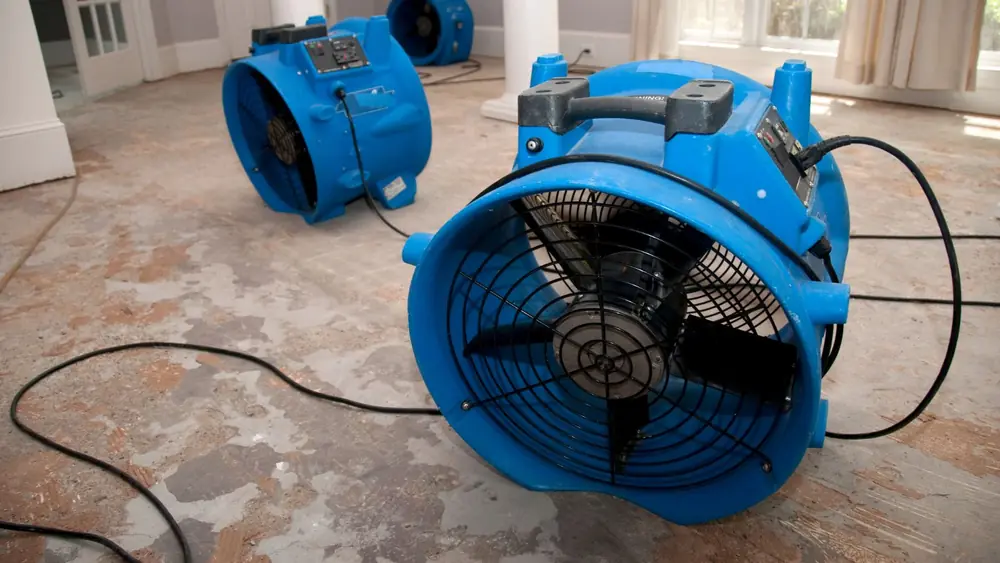
- Dry the structure with air movers and dehumidifiers and check moisture readings until it tests dry.
- Document the loss with photos and readings so repairs and any claim have a record.
Basement and lower-level flooding cleanup
Many Texas homes are built on slabs, but finished lower levels, garages, crawl spaces and sunken rooms still collect water from heavy rain, a failed sump pump or a drainage problem outside. Water that enters from the ground, not a pipe, is treated as contaminated.
Cleanup begins with extraction and removal of anything porous that stood in the water. Walls are cut above the wick line, floors are cleaned and the space is dried before any rebuild. If water keeps coming in after the storm, a drainage or foundation contractor needs to fix the cause. Restoration repairs the damage, but it is not waterproofing.
Flood damage is a call, not a project to start alone
Describe where the water came from and how deep it was.
Sewage backup cleanup
A sewage backup from a floor drain, a tub or a toilet is Category 3 water. Stay out of the room, keep children and pets away and do not use sinks or toilets that feed the same line. Do not try to clean it with a household vacuum or bleach.
A crew extracts the water, removes porous materials such as carpet, pad and lower drywall, cleans and sanitizes surfaces and dries the structure. If the blockage is in the city's main line, the utility needs to know, so ask your city's water and wastewater division who is responsible for the line that backed up.
Flood water category quick guide
Category assignments follow ANSI/IICRC S500 and are confirmed on site.
| Situation | Category | What usually happens |
|---|---|---|
| Rain through a roof or window, caught fast | 1 or 2 | Dry in place, remove wet pad and insulation |
| Washing machine or dishwasher overflow | 2 | Extract, remove porous materials, treat surfaces |
| Creek, lake or street flooding | 3 | Containment, removal, sanitizing and full drying |
| Sewer backup through drains | 3 | Remove porous materials, sanitize, dry |
| Clean water that sat more than 48 hours | Often 2 or 3 | Treat as contaminated and expect more removal |
Cost and insurance for flood damage
Flood restoration cost follows the water category, the depth and area affected, the materials that must come out, the drying days and the rebuild scope. Scope and price are explained before work starts. Want your real number? Describe the situation when you call.
Standard homeowner policies usually exclude flood, and flood coverage is a separate policy. A burst pipe or a broken washer hose is a different kind of loss from rising water, and your insurer decides which applies. Check your policy, report the damage quickly and photograph it before anything is moved.
Flood response across the area
The same process applies in Flower Mound, which sits along the north shore of Grapevine Lake, and in Coppell, where the 2015 emergency declaration also applied. After the water is out, water damage cleanup and structural drying finish the job before rebuilding begins.
Flood damage questions in Grapevine
Yes. Flooding does not wait for business hours, so the line is staffed nights and weekends. Same-day dispatch depends on crew capacity, and we never promise an exact arrival time. Stay out of flooded rooms with wet outlets and call the electric utility or 911 for electrical risks first.
Usually not. Standard home policies exclude flood and the Texas Department of Insurance says flood coverage requires a separate policy. Check your policy or ask your insurer, and photograph everything before cleanup.
Search your address on the FEMA Flood Map Service Center, and ask your insurer or agent about flood coverage. The city can also direct you to its floodplain information.
Hard, nonporous items can usually be cleaned and sanitized. Carpet, pad, insulation, particleboard and soft furnishings that touched contaminated water are usually discarded. Photograph everything first for your insurer.
Several days is common, and longer when walls, framing or hardwood were soaked. Crews take moisture readings at each visit and remove equipment only after materials test dry.