
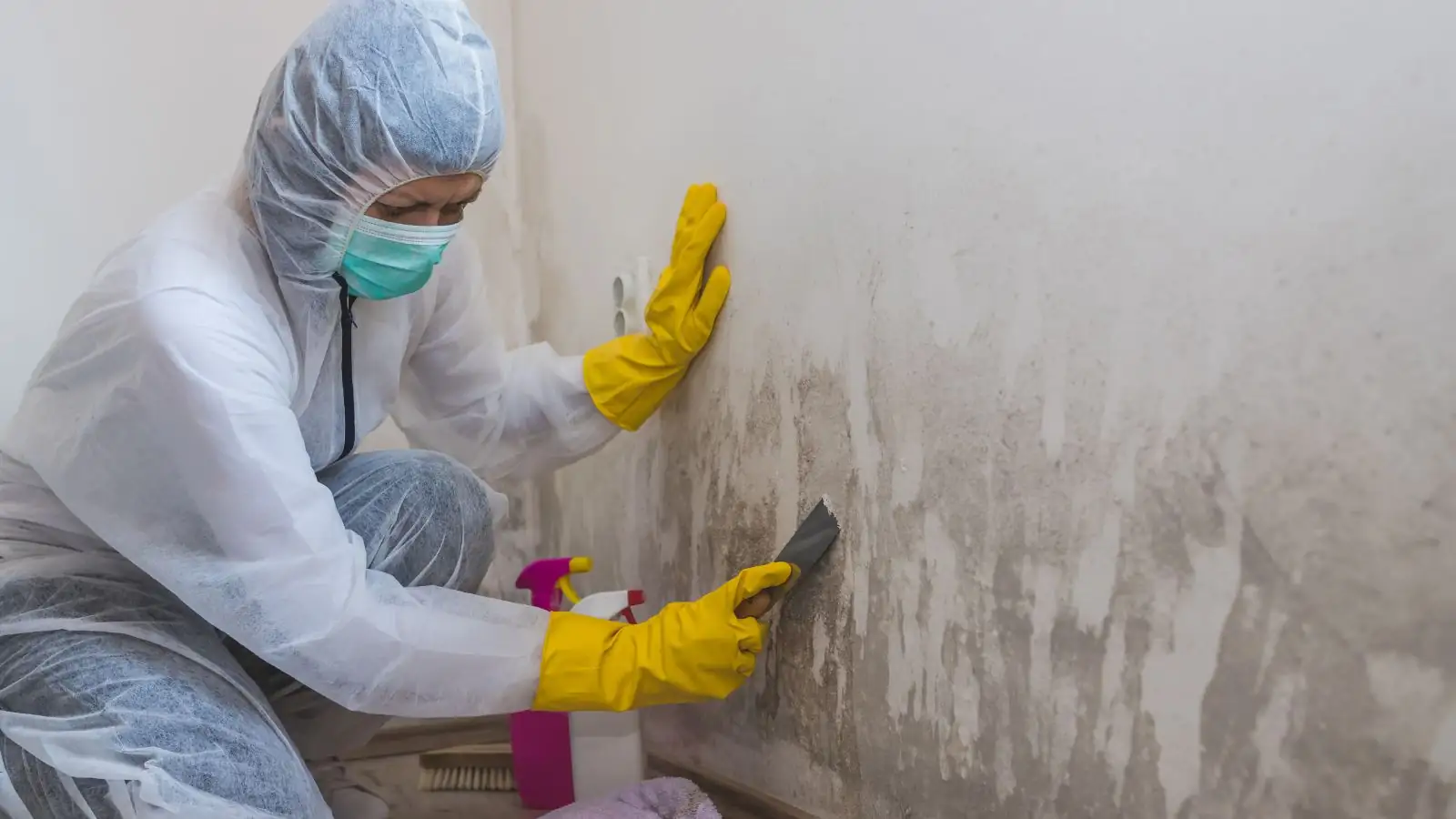
Getting rid of mold in a Grapevine, TX house starts with water
To get rid of mold in a house in Grapevine, TX, find and stop the moisture first. Cleaning growth off a wall while a pipe still drips behind it gives you a clean wall for a few weeks, then the same stain comes back.
Mold feeds on organic material such as drywall paper, wood, carpet and dust when it stays damp. Remove the damp and the growth stops expanding. Remove only the growth and it returns.
That makes the job a sequence. Fix the leak or humidity problem, dry the materials, remove what cannot be cleaned, then clean what can. The order matters more than the cleaning product.
Step one is finding the moisture
Most household mold traces back to one of a handful of sources. Check them before you buy a single cleaner.
Leaks you can see and leaks you cannot
Look under sinks, around toilets and behind washing machines. For hidden leaks, a moisture meter reads dampness through drywall, and a thermal imaging camera shows cool wet patches that the eye misses. Roof and window leaks leave rings that slowly grow.
Condensation and poor airflow
Cold windows, closets on exterior walls and rooms with no ventilation collect condensation. Exhaust fans that vent into the attic instead of outdoors push moisture into the structure. Humid Texas summers make an AC that cycles too briefly a common cause.
Past water damage
A flood or pipe burst that was never dried properly can leave wet cavities for months. If you see growth in a room that flooded earlier, the structure may still be wet. Our water mitigation crews dry buildings with air movers and LGR dehumidifiers before any rebuild.
Small patch or larger job
There is no single number that separates DIY from professional work, but these markers help you decide. When two or more apply to the larger column, stop and get an assessment.
| Situation | Small surface patch | Larger job |
|---|---|---|
| Size | A small spot on a hard, nonporous surface | Spread across a wall, ceiling or several rooms |
| Material | Tile, glass, sealed countertop or painted trim | Drywall, insulation, carpet, wood framing or ductwork |
| Moisture source | Known, fixed and now dry | Unknown, recurring or still active |
| Smell | None once cleaned | Musty odor that returns after drying |
| Cause | Condensation or a small spill | Leak, flood or sewage water |
| Next step | Clean, dry, watch humidity | Assessment and containment following ANSI/IICRC S520 |
Anyone with a concern about their own health should ask a physician.
How to clean a small patch safely
If the patch is small, on a hard surface and the moisture is already fixed, cleaning is reasonable. Keep it simple.
- Wear gloves, eye protection and a well-fitting respirator mask rated for particles.
- Close the door to the room and open a window or run an exhaust fan outward.
- Scrub with detergent and water, then wipe with clean damp cloths.
- Dry the area completely with towels and a fan.
- Bag the cloths and sponges, seal the bag and put it out with household trash.
- Watch the spot for a few weeks. Regrowth means the moisture source is still there.
Never mix cleaning chemicals, and never use a household cleaner on porous drywall hoping it will soak through. It will not reach the growth below the surface, and the damp liquid can add moisture to a wall that already has too much.
Mold keeps coming back?
An assessment finds the moisture and sets the scope.
Grapevine local note: check the mold license first
Texas licenses both mold assessment and mold remediation under Chapter 1958 of the Occupations Code, through the Texas Department of Licensing and Regulation (TDLR). Before you hire anyone in Grapevine, ask for the company's TDLR license number and check it with TDLR yourself. A company that cannot give you a number is a company to skip.
Senate Bill 1255 changed parts of the program effective September 1, 2025, and TDLR said current rules stay in effect until new ones are adopted. Because the details are in motion, confirm current requirements with TDLR before signing a contract.
What professional removal involves
Remediation under S520 practice sets up containment barriers and negative air, runs HEPA air scrubbers, removes materials that cannot be cleaned and cleans the rest with HEPA vacuums and damp wiping. Wet materials are dried before anything is rebuilt. Our mold remediation service follows that sequence.
Scope depends on affected area, materials and how much of the structure is wet. Anyone who quotes a job without looking at the moisture is guessing. If the cause was a pipe, an overflow or storm water, water damage repair usually comes after the mold work.
Expect a clearance step at the end. A post-work check confirms that growth is gone and moisture readings are back to normal, and your insurer may ask for that paperwork. Keep every receipt and report in one folder.
Crews serve nearby towns too, including Colleyville and Euless.
Getting rid of mold in Grapevine homes
A small patch on a hard surface with a known, fixed moisture source is often handled with detergent, water and drying. Anything on drywall, insulation or carpet, or anything that returns, needs an assessment. Health questions go to a physician.
Vinegar may clean light surface growth on hard materials. It does not dry a wall and it does not reach growth inside porous materials. The moisture still has to be fixed.
Ask for the company's TDLR license number, then verify it on the TDLR website. Texas licenses mold assessment and mold remediation separately under Chapter 1958 of the Occupations Code.
Because the moisture source remains. Hidden leaks, high humidity and wet insulation keep materials damp. Find the source with a meter, fix it and dry the area before cleaning again.
Texas Department of Insurance guidance says mold on a covered damaged item is covered, while mold from gradual leaks is usually excluded. Many policies do not include cleanup or testing after the damaged item is removed. Ask your agent.
Senate Bill 1255 changed parts of the licensing program effective September 1, 2025. TDLR said current rules stay in effect until new ones are adopted, so check TDLR for updates before hiring.