
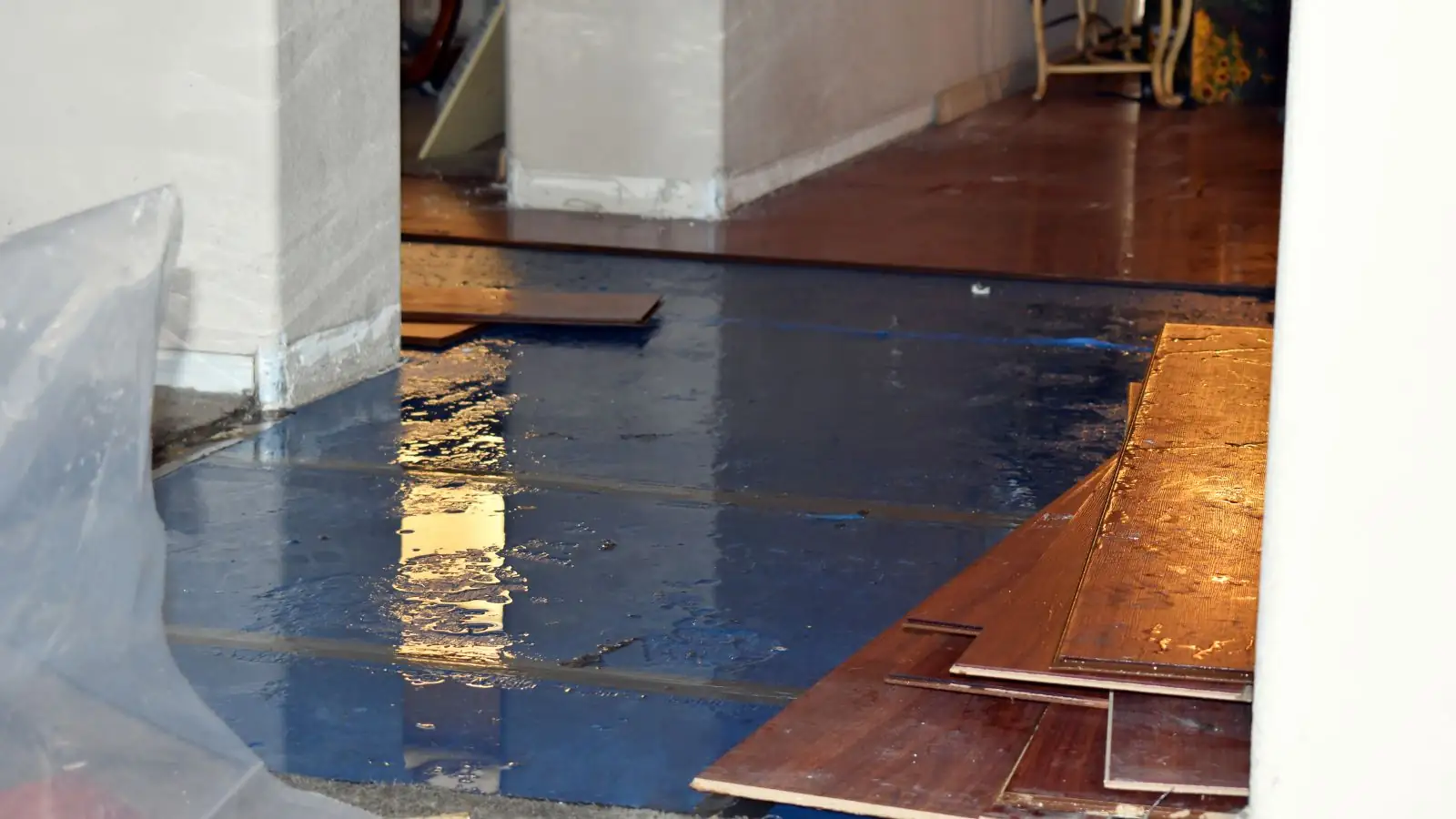
Can hardwood floors be saved after water damage in Grapevine, TX?
Often yes, if the water was clean, the response was fast and the subfloor did not stay saturated. Boards that are only slightly cupped may flatten as they dry. Floors that sat wet for many days, buckled off the subfloor or soaked in contaminated water are usually replaced.
Wood absorbs moisture through its edges and underside, so the surface can look fine while the boards and subfloor remain wet. A moisture meter, not appearance, decides the plan.
Species and finish matter as well. Solid oak, maple and similar planks swell more than engineered boards with a thin top layer, though engineered floors can delaminate when soaked. Prefinished boards seal the top but leave seams open, so water still finds its way underneath.
Signs, causes and next steps
Use this table to match what you see on the floor to a likely cause.
| Sign | Likely cause | What to do |
|---|---|---|
| Cupping, with edges higher than the center | Moisture from below or a slow leak that wet the underside | Find and fix the source, dry, and wait before sanding |
| Crowning, with centers higher than the edges | Boards sanded or finished while still too wet | Let the floor equalize, and then have it evaluated |
| Buckling, with boards lifting off the subfloor | Heavy flooding or a major supply leak | Treat as an emergency and expect partial or full replacement |
| Dark stains or black spots along seams | Long-term moisture and finish failure | Check for hidden leaks and test moisture levels |
| Gaps between boards after drying | Boards shrinking back after swelling | Monitor and discuss refinishing or fill options |
| Soft or spongy areas | Rot or saturated subfloor | Stop foot traffic and plan removal |
Safety first
If water pools near outlets or a bowed ceiling hangs above a wet floor, stay out and call 911 or your electric utility before calling a restoration crew. Cut power only if the panel is reachable on dry ground. Wet wood is slippery, so wear shoes with grip.
Hardwood starting to cup or lift?
A fast response gives boards the best chance.
How wet hardwood is dried
Specialists treat hardwood as a drying project first and a repair project second.
Extraction and drying systems
Standing water is pulled with extraction units. Crews then place air movers and LGR dehumidifiers, often with panel drying mats that draw moisture from the board surface and subfloor. Drying time typically ranges from about 3 to 7 days depending on species, thickness and how long the water sat.
Our mitigation service runs this stage, and emergency water removal covers the initial extraction.
When replacement makes sense
Boards that stay buckled, split or rotten after drying are replaced, along with any damaged subfloor. Contaminated water, such as sewage or flood water, usually means removal. Replacement and refinishing fall under water damage repair, and matching the finish across rooms is part of that scope.
What you can do before the crew arrives
Stop the source first, whether that is a supply line, appliance hose or roof leak. Then blot or mop standing water, lift small rugs and furniture, and set aluminum foil or plastic blocks under heavy legs so the finish does not stain.
Run the air conditioning to pull humidity from the room and open interior doors for airflow. Skip heaters, which can dry the surface too fast and cause cracking. Take photos of the whole floor and close-ups of any lifted boards before anything changes.
Grapevine local note: humid summers and floor movement
Grapevine summers are long, hot and sticky, and winters are short and mild. Wood floors respond to that swing in indoor humidity, so a small amount of seasonal movement is normal.
Use that as a baseline, not an excuse. If cupping appears in one area, or follows a spill or leak, treat it as a moisture problem. Keep indoor humidity steady with your air conditioning and ask a pro to check for hidden leaks.
Mistakes that ruin hardwood
Sanding too soon is the classic one. Sanding cupped boards before they reach a stable moisture level can leave them crowned once the moisture drops. Another mistake is covering a wet floor with a rug, plastic or wax, which traps moisture and invites staining.
Do not wait weeks to see what happens. The Texas Department of Insurance notes that mold can start growing within a day after a leak, and a wet subfloor under hardwood is a hidden, protected place for it. If growth appears, mold remediation follows.
Insurance and documentation
Cost depends on how many rooms are affected, whether the boards are solid or engineered, how long the floor stayed wet and whether the finish must be matched across open spaces. Drying days and rebuild scope add to the total, so ask for the plan in writing.
Sudden and accidental water damage, such as a failed supply line, is often covered, while gradual leaks and neglect often are not. Check your policy, photograph the floor before work starts and keep receipts. Our crews serve Coppell and Euless as well as Grapevine.
Hardwood water damage questions in Grapevine
Slight cupping can ease once the floor reaches a stable moisture level, but only after the source is fixed and the boards and subfloor are dry. Give it time and have readings taken before sanding.
Typically 3 to 7 days with air movers, dehumidifiers and drying mats, though dense species, thick boards and a long soak push that out. Moisture readings decide when it is finished.
Buckling means boards have pulled away from the subfloor and often means removal of those areas. A crew checks the readings and condition before deciding.
Not until moisture readings are stable, since sanding too soon can lead to crowning. Wait for confirmation from a flooring professional.
The climate is humid subtropical, with long, hot summers, so wood floors move with the seasons. Steady indoor humidity from your HVAC helps limit that movement.
Not automatically. Crews often use drying mats and measured readings first. Removal makes sense when boards are buckled, contaminated or the subfloor stays wet.