
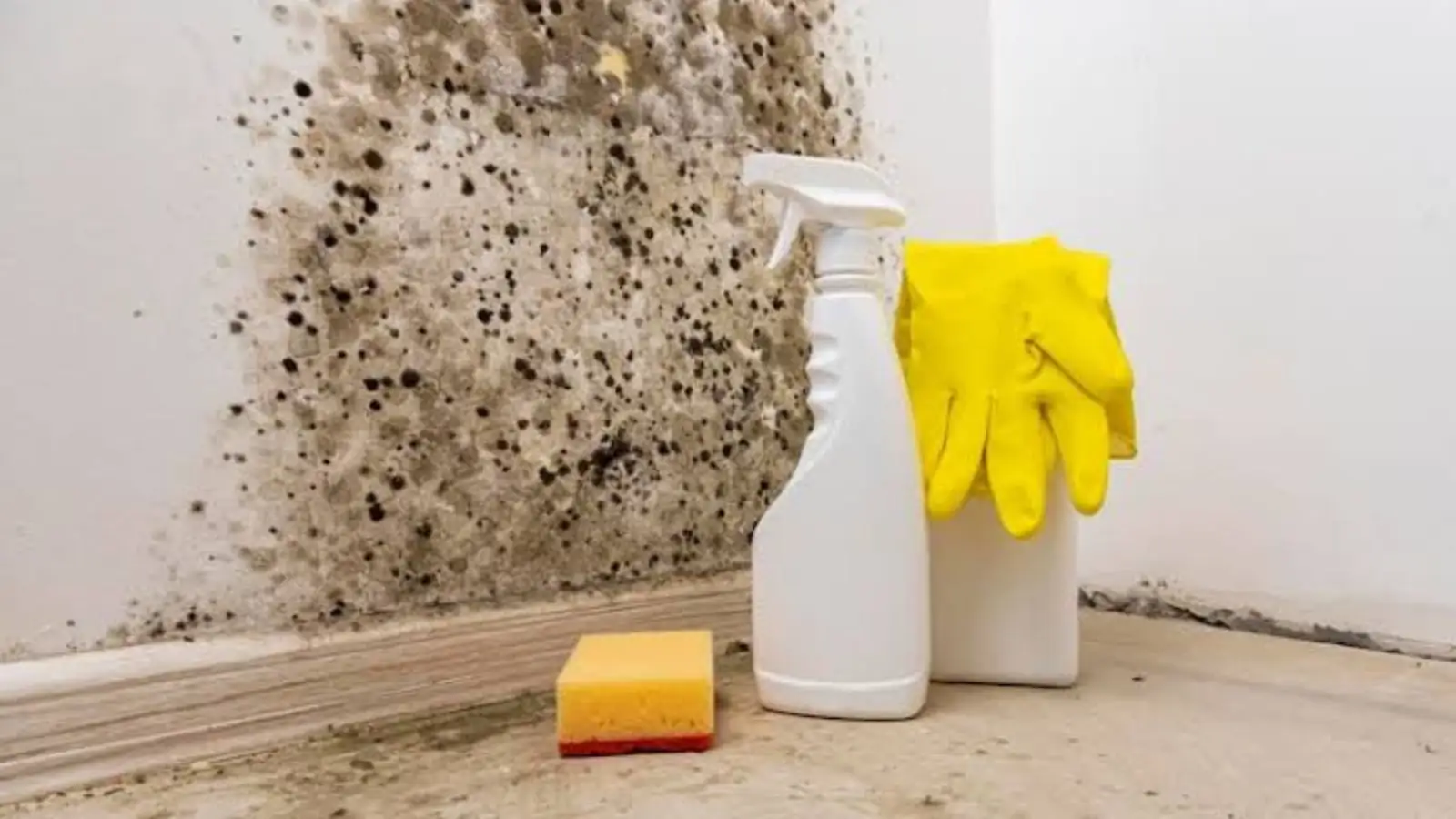
What mold removal products can do in a Grapevine, TX home
Mold removal products clean surfaces. That is the honest summary. A good cleaner can lift growth and stains off tile, glass, sealed counters and painted trim in a Grapevine, TX bathroom or kitchen, and a dehumidifier can lower the humidity that feeds it.
No product can dry a wet wall, repair a leaking pipe or reach growth inside drywall, insulation or carpet pad. Those materials are porous, so the cleaner sits on top while the problem sits below. If a product only seems to work for a few weeks, moisture is still arriving.
Product types, strengths and limits
Labels change, but most products fall into a few families. This table sorts them by what they actually do.
| Product type | Good for | Limits |
|---|---|---|
| Detergent and water | Small patches on hard, nonporous surfaces | Does not reach into porous materials, and it needs full drying afterward |
| Household bleach solution | Whitening stains on tile and glass | Not effective on porous materials, harsh fumes, never mix with ammonia or other cleaners |
| Vinegar | Light surface growth on hard materials | Adds moisture, has a strong smell and does not dry a wall |
| Commercial mold sprays and wipes | Spot cleaning on bathroom grout and sealed surfaces | Follow the label, and they do not fix the water source |
| Stain-blocking primer | Covering stains after cleaning and drying | Paint over wet material peels, and primer is not a cure |
| Dehumidifier | Holding indoor humidity down after a leak is fixed | Does not remove growth and cannot dry a hidden leak |
| Fogging products | Little value in homes | Can spread spores, and they leave the cause untouched |
Read every label and test cleaners in a hidden spot first.
Why products fail
Most failures come down to three problems, and a product aisle cannot solve any of them.
The moisture is still there
Growth needs damp materials. If a supply line weeps inside a wall, every cleaning pass is temporary. Moisture meters and thermal imaging cameras find the wet area, which is why crews start with a reading before they pick a method.
The material is porous
Drywall, ceiling tile, insulation and carpet pad absorb water and the growth moves in with it. These materials are usually removed and replaced, not scrubbed. The published standard for the work is ANSI/IICRC S520.
The cleanup spreads it
Dry scrubbing, sanding and aggressive spraying can move spores into other rooms. Containment barriers and HEPA air scrubbers exist for that reason. Without them, a small problem can become a house-wide one.
Safety first
Never mix bleach with ammonia or other cleaners, since the fumes are dangerous. Ventilate the room, wear gloves and eye protection, and stop if you smell strong chemical odor. If water is near electrical outlets or a panel, stay out and call the utility or 911 before you call a restoration line.
Cleaner not enough?
A moisture reading shows what a product cannot.
Grapevine local note: summer humidity works against products
Warm, humid weather lasts much of the year here. In practice, that means indoor air in a Grapevine home carries more moisture for much of the year, and bathrooms, closets and garages can stay damp even without a leak. Run the air conditioner, use exhaust fans and keep a hygrometer so you know when humidity drifts up.
The same climate is why a product that worked in a dry month can seem to fail in July. Humidity returns, the surface stays damp and growth restarts. Treat humidity control as part of the product plan and not an add-on.
When to stop DIY and call
Use this short checklist. If any item applies, a product is no longer the right tool.
- The affected area is larger than a small spot or spans more than one surface.
- Growth is on drywall, ceiling material, insulation, carpet or wood framing.
- A musty smell returns after cleaning and drying.
- The cause was a burst pipe, sewage, storm water or a long leak.
- You cannot locate the moisture source.
- Someone in the home has health concerns. Those belong with a physician.
Our mold remediation team can assess scope and set containment. If wet materials are behind the problem, water mitigation dries the structure first. Crews travel to Southlake and Flower Mound from Grapevine as well.
Reading a product label
Look for the surfaces the product lists, the contact time it needs and the ventilation warnings. A product that says it is for hard surfaces should not go on drywall, fabric or wood. A contact time of several minutes means the surface must stay wet that long before wiping.
Be wary of labels that promise to stop mold for months or years. A coating cannot beat a damp wall. Also check whether the cleaner is safe near children, pets and fabrics before you use it indoors.
Buying smart if you still go DIY
Choose a product for the surface in front of you, read the label and respect the ventilation notes. Buy a hygrometer before you buy a spray. Spend on a dehumidifier sized for the room if humidity runs high. Skip anything that claims to prevent mold permanently, because nothing can if the room stays damp.
Mold product questions in Grapevine
There is no single best product. Detergent and water handle small hard-surface patches, and a dehumidifier handles humidity. Neither fixes a leak, so find the moisture first.
Bleach is not effective on porous materials. It may lighten the surface while growth continues below. Wet or moldy drywall is usually cut out and replaced.
They can help on a dry, cleaned surface in a damp-prone room. They do not stop growth if the wall stays wet. Dry and clean first, then coat.
A dehumidifier lowers humidity, which stops growth from spreading. It does not remove growth that already exists. Pair it with cleaning or removal.
The patch stays gone for several weeks, humidity stays in a normal range and no musty odor returns. If growth reappears, the source is still wet.
Yes, in practice. Humid subtropical summers make a dehumidifier and a hygrometer more useful than extra sprays. If humidity stays high even with the air conditioner running, ask a professional to check for a hidden source. You can reach us here for that.