
What renters insurance covers after water damage in Grapevine, TX
If you rent in Grapevine, TX, your renters policy generally pays for your own belongings after sudden and accidental water damage. Think of a burst pipe, a toilet overflow or a broken washer hose. Texas Department of Insurance guidance says most homeowner and renters policies cover those events.
The building itself usually belongs to the landlord and falls under the landlord's policy. That means walls, flooring, cabinets, ceilings and plumbing. Your couch, mattress, laptop, clothing and rugs are the items your renters policy is built for.
Gradual leaks and seepage are a different matter. Most policies exclude them, along with the mold they cause. Flood water is excluded too, because standard policies do not cover floods and flood coverage needs a separate policy. Your declarations page and policy wording decide what applies, so ask your insurer before you assume.
Your first hour as a renter
Speed matters because wet drywall, carpet pad and cabinet bases start to break down quickly. Work through these in order and stop at any step that is unsafe.
- Shut off the water at the valve under the fixture or at the main if you can reach it safely.
- Message your landlord or property manager in writing, with the time you found the leak.
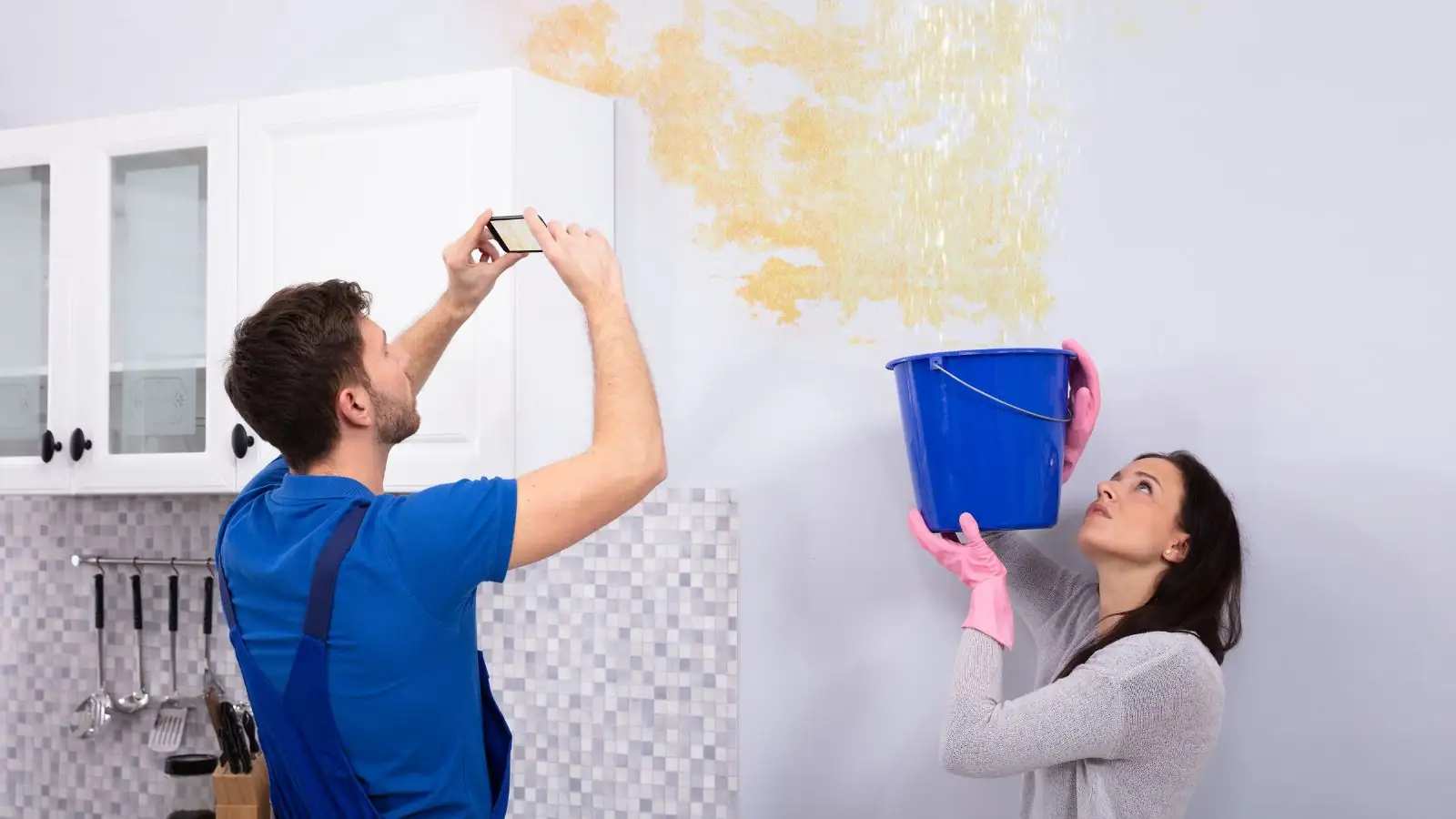
- Photograph or video the water, the source and every damaged item before you move anything.
- Lift furniture off wet carpet and move small items to a dry, ventilated room.
- Pull up wet rugs and soak up standing water with towels or a wet vacuum if the outlets nearby are dry.
- Ask the landlord who is arranging drying, and request a name and a date.
Most leases make the landlord responsible for the structure, so extraction and drying of the unit often start with that request. If the landlord is slow, our team can explain what water mitigation involves so you know what to ask for.
Safety first
If water is near outlets, a breaker panel, a ceiling light fixture or an appliance, stay out of the room and call 911 or the electric utility before you call anyone else. Cut power only if the panel is dry and you can reach it without stepping through water. Never touch sewage or a sagging ceiling.
Who handles what: renter, landlord and insurer
Responsibilities vary by lease, so read yours. This table shows the usual split.
| Item | Usually handled by | Notes |
|---|---|---|
| Shutting off water and limiting damage | Renter, then landlord | Reasonable steps to prevent more damage are expected of everyone. |
| Walls, floors, ceilings, cabinets | Landlord and landlord's insurer | Structure normally sits outside a renters policy. |
| Furniture, clothing, electronics | Renter and renters insurer | Covered when the cause is sudden and accidental. |
| Drying the unit | Landlord or a restoration crew they hire | Ask for the schedule in writing. |
| Temporary housing | Check your policy | Some policies help when a unit is unlivable, terms vary. |
| Mold from a gradual leak | Often excluded | Ask your agent about options. |
General guide only. Your lease and policy control.
Water on the floor of your rental?
Our dispatch line can send a crew to start extraction while you talk to your landlord.
Documenting the loss for your insurer
Good records make a claim easier to review. Insurers and adjusters want to see what you owned, what it looked like and what you did next.
Build an item list
List each damaged item with its age, brand and where you bought it. Add photos of serial numbers on electronics. A room-by-room walk with your phone camera, narrating what you see, fills gaps quickly.
Keep damaged items
Do not throw wet belongings away until the adjuster has seen them, unless they are a health hazard such as items soaked in sewage. Store them in a dry spot and photograph them first.
Keep every receipt
Save receipts for towels, fans, storage bins, hotel nights and anything bought to limit damage. Write a dated note each time you speak with the landlord or insurer.
Grapevine local note: reporting hidden damage on time
The Texas Department of Insurance says hidden damage should be reported within days of the first sign. A stain that appears on a closet wall or under a bathroom sink is exactly that kind of case. If you spot one, photograph it that day and report it that week instead of waiting for a lease renewal or a repair visit.
The same guidance says to report to your insurer quickly and to leave permanent fixes alone until an adjuster has been through. As a renter you rarely do permanent repairs anyway, but it is a good reason to let the landlord's contractor wait until your belongings are documented.
Your duty to limit further damage
Policies expect you to make temporary repairs and protect property from more harm. In a rental, that means closing valves, moving items, running towels and fans and getting the landlord involved quickly. It does not mean cutting into walls or replacing flooring.
Our crews work across Grapevine and also head to Colleyville and Southlake when renters there need help. We can set up extraction and drying equipment, moisture mapping and a written scope for the landlord, and our emergency water removal team handles standing water first. Move wet belongings to a dry room before the crew arrives so they can reach the affected surfaces.
Renters water damage questions in Grapevine
Often yes for your belongings, if the water came from a sudden and accidental source such as a burst pipe. The building damage is typically the landlord's matter. Report it to your insurer and landlord promptly, and ask your agent whether anything about the source changes coverage.
The landlord normally arranges and pays for drying the structure, since it is part of the building. Your renters policy focuses on your belongings. Ask the landlord in writing who is hiring the crew and when work will start.
Mold that develops on a covered damaged item is covered under most policies. Mold from gradual leaks and seepage is usually excluded, and mold cleanup or testing is often not included either. Ask your agent about options.
Photograph them first and keep them until the adjuster has seen them, unless sewage or another hazard is involved. Move them to a dry or ventilated room so they do not get worse while you wait.
Keep sending written messages with dates and photos, and keep making reasonable efforts to limit damage. Review your lease for repair procedures and contact the Grapevine building inspection department if you have a code question. Your insurer can advise on the claim side.
As soon as possible. Texas Department of Insurance guidance says hidden damage should be reported within days after you first see it. Early reporting also protects your belongings, because moisture spreads quickly into upholstery and cardboard.