
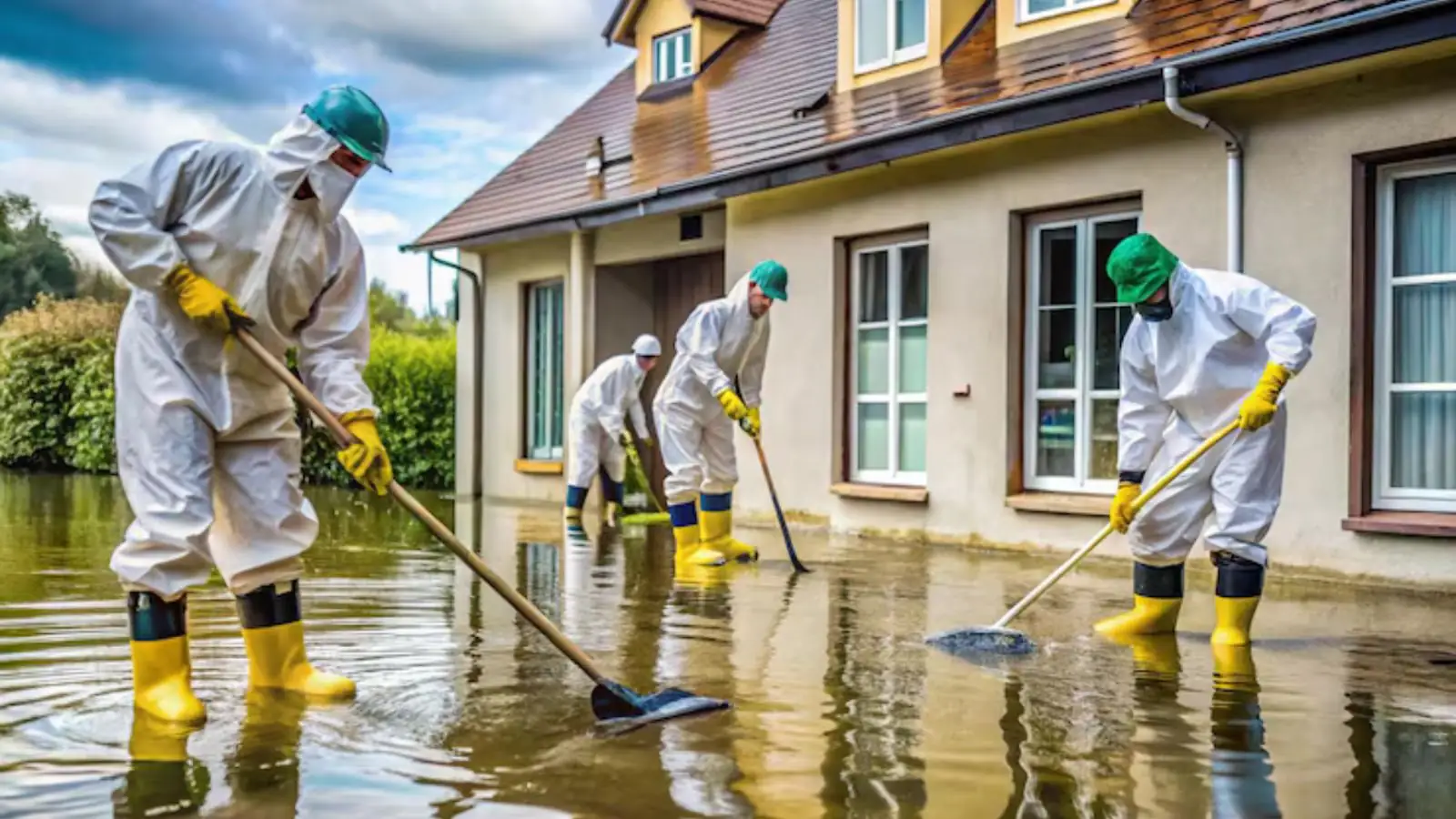
Sewage backup in Grapevine, TX: the first steps that matter
Stop using every drain in the house, keep people and pets out of the affected area and open windows if the air outside allows it. Toilets, sinks, showers and washing machines all feed the same line, so each flush or load adds to the problem. A backup can surface at a floor drain, a basement or garage drain, a tub or a toilet.
Sewage is classified as Category 3 water under ANSI/IICRC S500, meaning it is grossly contaminated. That label changes everything about how it is handled, from the protective gear to which materials can stay.
Safety first
If water is near outlets, appliances or the electrical panel, stay out and call 911 or your electric utility before anything else. Smell gas? Leave the house and call the gas company or 911 right away. Cut power only if the panel is reachable on dry ground. Do not stand in the water, and keep out of rooms where the ceiling or floor looks soft or sagging.
What homeowners should not do
Well-meaning shortcuts are how a contained backup turns into a whole-house problem.
- Do not run the dishwasher, washer or any faucet to see whether the line clears.
- Do not use a household wet vacuum on sewage, because it blows contaminated mist into the air and can be damaged by the liquid.
- Do not mix bleach with other cleaners, especially ammonia-based products.
- Do not walk through the area and then through clean rooms, since shoes carry contamination.
- Do not run the HVAC system, which can spread odor and airborne particles through the ducts.
- Do not try to save carpet, pad or upholstery that sat in the water.
- Do not pour chemical drain cleaner into a backed-up line, as it can splash and harm pipes.
Photograph the affected area before you leave it, and then close the door to that room.
Sewage on the floor right now?
Our dispatch line sends a crew trained for contaminated-water cleanup.
Where the backup shows up and what it suggests
The location of the overflow hints at where the blockage sits. A plumber confirms it, but this helps you describe the problem.
| Where it appears | Likely meaning | Best next step |
|---|---|---|
| Lowest floor drain only | Blockage in the lateral line or main | Stop water use and call a plumber with a drain camera |
| Toilet and tub together | Main house line is blocked | Stop all drains and keep people out of the room |
| Single fixture, slow drain | Local clog in a branch line | Plumber visit, and watch for overflow |
| Several homes on the street | City main may be involved | Contact the Water and Wastewater Division |
Only a plumber's inspection can confirm the true cause.
How professional sewage cleanup works
The goal is to remove contamination, not move it around. A crew works in a defined order so clean areas stay clean.
Containment and removal
Technicians wear protective suits, gloves, boots and respirators, and set up containment barriers with plastic sheeting. Extraction units pull the liquid out, and porous materials such as carpet, pad, baseboard and lower drywall are cut out and bagged.
This stage belongs to water damage cleanup, and the first extraction can overlap with emergency water removal.
Disinfection, drying and air control
Remaining hard surfaces are cleaned, treated with an appropriate disinfectant and dried with air movers and LGR dehumidifiers. HEPA air scrubbers run behind containment to capture airborne particles. Typical drying takes roughly 3 to 5 days, and moisture readings decide when it is finished.
Grapevine local note: who handles the city side
Grapevine's Water and Wastewater Division handles billing and infrastructure. If several homes on your street back up at once, or your backup began right after a municipal line problem, the city side may be involved, so contact the division and tell your plumber what you learned.
The city also publishes annual water quality reports, and treated water from the Trinity River Authority reaches Euless, Bedford, Colleyville, Grapevine and North Richland Hills. That report covers drinking water, not sewage. If your water bill jumps after a backup, ask the utility billing office at City Hall, and keep your photos handy.
Finding the cause and what insurance may say
A plumber with a drain camera can tell whether the blockage is inside your home, in the lateral line running to the street, or in the city main. That matters for responsibility and for repairs, and it is worth having the finding in writing.
Many policies treat sewer and drain backup as a separate optional endorsement, and sudden and accidental damage may be treated differently from gradual seepage. Check your policy and ask your insurer before cleanup begins. Crews also reach Euless and Coppell from Grapevine, and the advice is the same there.
After cleanup: confirming the space is ready
Ask what readings show that materials are dry and what was removed. Rebuilding only starts once the cavity and subfloor test dry. Replacement drywall, trim and flooring go in under repair work, so confirm the scope before anyone closes up a wall.
Sewage backup questions in Grapevine
Yes. It is Category 3 water, so contamination spreads to porous materials quickly. Stop using drains, keep people out of the area and arrange extraction as soon as it is safe.
A small spill on a hard, nonporous floor may be manageable with protective gear, but anything that touched carpet, drywall or wood needs professional removal. If you are unsure, treat it as a larger job.
It depends on your policy. Sewer and drain backup is often a separate endorsement, so check your policy and ask your insurer or agent before cleanup begins.
Leave the area, keep people and pets out and call the gas company or 911 if you smell gas. Then ask a plumber to find the source of the odor.
Start with the City of Grapevine's Water and Wastewater Division, since a main-line problem is outside your property. Then call a plumber and a restoration crew for the interior.
A City of Euless page states that treated water from the Trinity River Authority is delivered to Euless, Bedford, Colleyville, Grapevine and North Richland Hills. For your own supply questions, use the city's published water quality report or contact the utility billing office.