
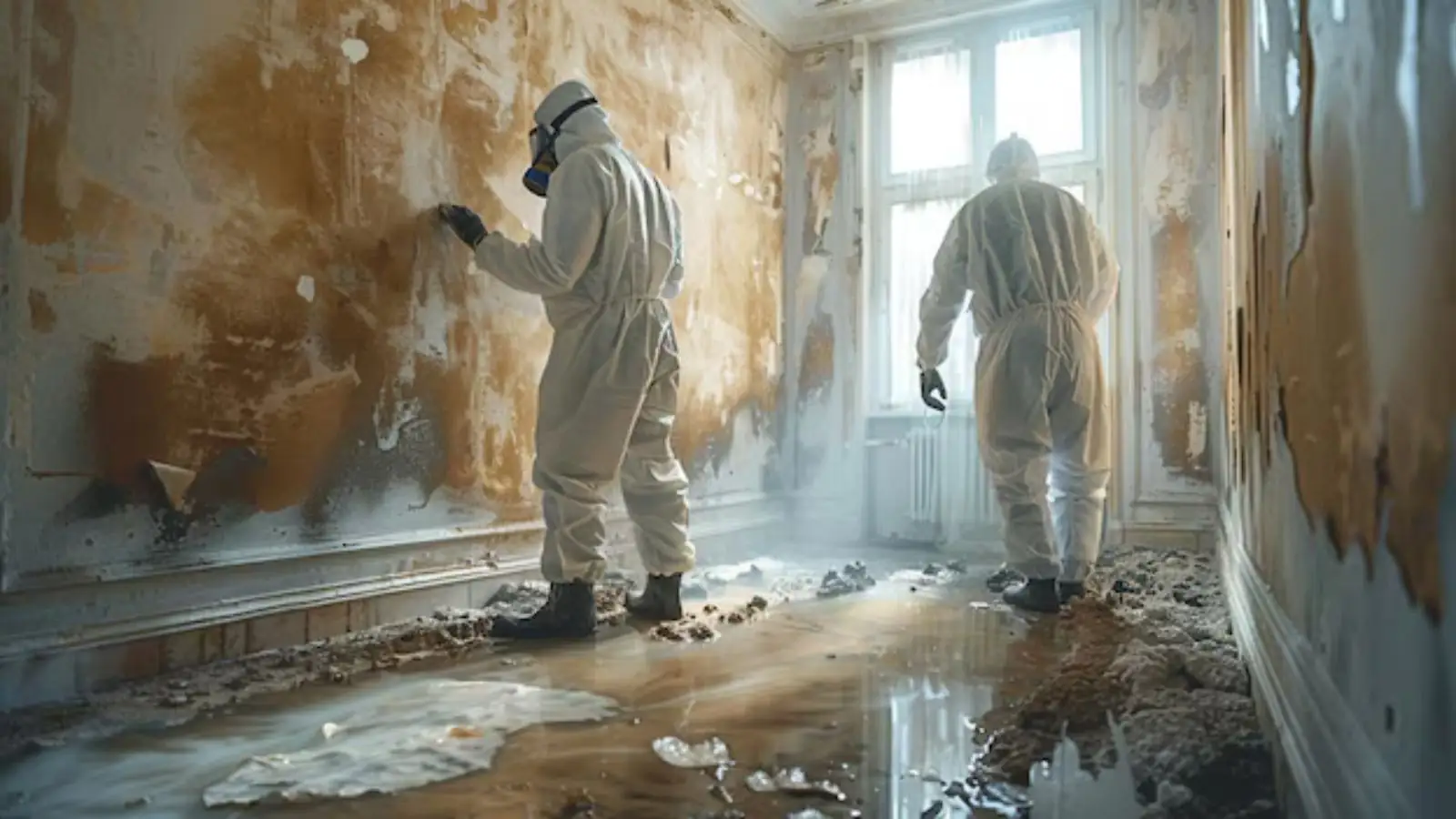
Why wet drywall becomes a mold problem in Grapevine, TX
Mold is not something that appears out of nowhere after a leak. It needs moisture, a food source and time. A wet house in Grapevine, TX supplies all three, because drywall paper, wood framing, insulation and carpet pad are organic materials that hold water long after the surface looks dry.
The Texas Department of Insurance says mold can start growing within a day after a leak. In practice, the first 24 to 48 hours decide how the job goes. Water that is extracted and dried inside that window usually leaves a drying job. Water that sits for several days often leaves a drying job and a mold job.
Humid summers in North Central Texas make this tighter. Warm indoor air that already carries moisture slows evaporation, so wet materials dry more slowly unless dehumidification is running.
The moisture timeline after a leak
These ranges are general. Water category, temperature, humidity and the type of material all shift them, so treat the table as a planning guide and not a promise.
| Time since the leak | What is happening | What helps |
|---|---|---|
| 0 to 24 hours | Water wicks into drywall, baseboards and pad. Mold growth can begin on damp surfaces. | Stop the source, extract standing water, start air movement and dehumidification. |
| 24 to 72 hours | Materials stay wet inside walls and under flooring. Musty odor may appear. | Moisture mapping, wet carpet pad removal, air movers and LGR dehumidifiers. |
| 3 to 7 days | Visible growth is possible on drywall, framing and the back of cabinets. | Controlled removal of wet materials and a mold assessment if growth is visible. |
| Beyond a week | Growth can spread to hidden cavities and nearby dry surfaces. | Containment, HEPA air filtration and remediation following ANSI/IICRC S520. |
Ranges are typical, not exact. A moisture meter reading, not the calendar, tells you when a material is dry.
What to do in the first day
Speed matters more than perfection. These steps follow the same order a crew would use, and most of them need nothing more than a bucket, a wet vacuum and some patience.
- Stop the water at the source. Close the shutoff valve to the fixture or the main valve for the house.
- Remove standing water with a wet vacuum, mop or towels, and lift small rugs and loose items off wet floors.
- Move furniture, books and cardboard boxes to a dry, ventilated room.
- Run fans and, if you have one, a household dehumidifier. Keep the air conditioner on to pull humidity down.
- Photograph or video the damage before you clean up, then call your insurer.
- Call a water damage crew if wet areas are larger than a few square feet or if water has reached walls or insulation.
Household fans and a small dehumidifier help on minor spills. They rarely dry wall cavities or subfloors, which is where mold most often starts.
Safety first
If water is near outlets, a breaker panel or a light fixture, or if you smell gas, stay out and call 911 or the utility before you call a restoration line. Cut power only if the panel can be reached dry and safely. Sagging ceilings and water that may contain sewage also mean stay out.
Water still in the walls?
A fast response keeps a leak from becoming a mold job.
Grapevine local note: how Texas policies treat mold
Per Texas Department of Insurance guidance, typical homeowner and renters policies respond to sudden, accidental water damage, and mold that develops on a covered damaged item is covered too. Most policies exclude gradual leaks and seepage, along with the mold they cause. So if a Grapevine homeowner finds mold behind a vanity that has dripped for months, the claim may be denied, and reading the policy before you call your agent saves surprises.
The same guidance says most home policies do not include mold cleanup or testing after a damaged item is removed. Ask your agent which options exist, and keep photos and receipts either way. Flood mold is a separate matter, since standard policies do not cover floods and flood coverage needs its own policy.
When it is no longer a drying job
Some signs point past drying. A musty smell that returns after the room feels dry, dark or fuzzy growth on drywall or baseboards, and staining that spreads along a wall all suggest moisture is still present somewhere.
Dry first, then assess
Remediation without drying only repeats the problem. A crew should find the moisture with a meter or thermal imaging camera, fix the source and confirm the structure is dry before anything is sealed back up. Our water mitigation work covers extraction and structural drying for that reason.
Remediation follows S520
When growth is established, the published industry standard is ANSI/IICRC S520. It calls for containment, negative air with HEPA filtration and removal of materials that cannot be cleaned. If that sounds like your situation, read about mold remediation in Grapevine and ask questions about scope before work starts.
Health questions
We cannot say what mold does to any one person. If someone in the home has a concern, that conversation belongs with a physician.
Where crews travel from Grapevine
Dispatch covers the neighboring cities too. Homes in Southlake and Colleyville follow the same drying clock, so the advice above applies there as well.
Water damage and mold questions in Grapevine
Texas Department of Insurance guidance says mold can start growing within a day after a leak. Visible growth usually takes longer, often several days, and depends on temperature, humidity and the material. Drying inside the first 24 to 48 hours is the best protection.
Surface cleaning may remove stains on hard, nonporous surfaces, but it does not fix the moisture behind them. Drywall and wood absorb liquid, so growth often continues inside. If it keeps returning, the source of moisture is still active.
Generally, mold on a covered, sudden and accidental loss is covered, while mold from gradual leaks is often excluded. Policies differ, so ask your agent. The Texas Department of Insurance also offers consumer help by phone.
A visual check is not enough. Crews use moisture meters and compare readings with a dry reference material in the same home. Keep walls open until readings match, then rebuild.
Not always, but it usually means damp materials somewhere. Check under sinks, behind appliances and along exterior walls, then dry what you find. A smell that stays after drying is a reason to schedule an assessment.
Coverage comes from your policy and Texas law, not from the city. The Texas Department of Insurance notes that most home policies exclude mold from gradual leaks and from floods. See our mold remediation page for what the work involves once the policy question is settled.