
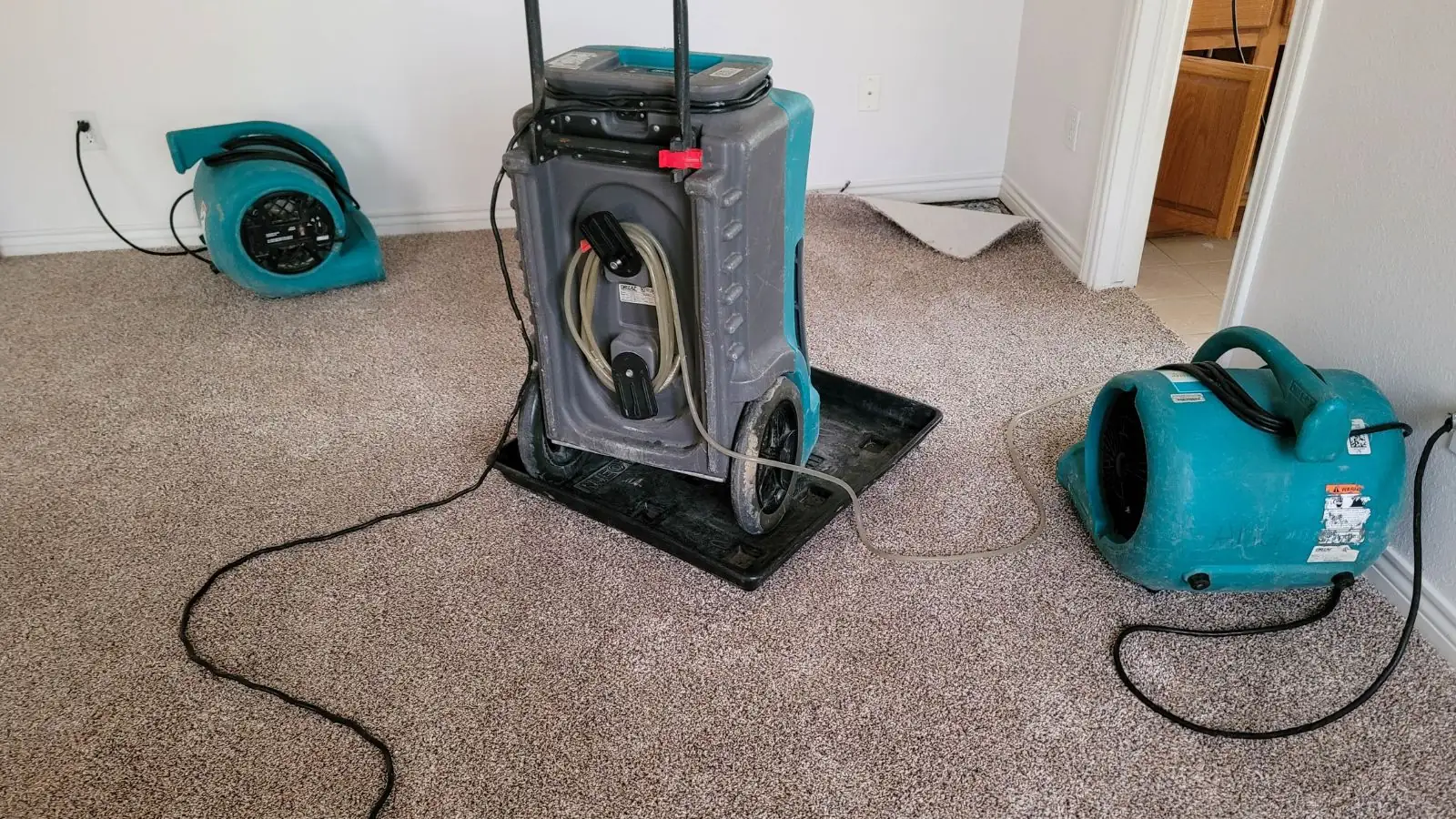
How water extraction and drying work in Grapevine, TX
Extraction removes bulk water. Structural drying removes the water that has soaked into drywall, framing, subfloor and cabinets. In a Grapevine, TX home both stages matter, and skipping the second one is how hidden moisture ends up behind a freshly painted wall.
Crews usually work in this order: stop the source, extract standing water, inspect with moisture meters and thermal imaging, set drying equipment and monitor until the readings reach a dry standard. ANSI/IICRC S500 describes this approach as published industry practice.
Speed helps because water keeps travelling. It wicks up drywall, seeps under baseboards and spreads through carpet pad, so a puddle in the kitchen can become a wet wall in the next room within hours. The sooner extraction starts, the smaller the area that needs drying.
The equipment on a typical job
Each tool does one specific job. Together they move water out of materials faster than open windows and a box fan could.
Extraction units
Truck-mounted or portable extractors pull standing water and soak water from carpet and pad. A weighted wand on hard floors speeds the work. Removing water mechanically is far faster than evaporating it.
Air movers
These high-velocity fans sweep air across wet surfaces, pushing moisture off them. They are positioned along walls and under lifted flooring, not scattered in the middle of the room.
LGR dehumidifiers
Low grain refrigerant dehumidifiers pull moisture out of the air so drying keeps going. Without them, the humid air simply returns the water to the materials.
Moisture meters and thermal cameras
Meters give numbers for specific spots, and thermal imaging cameras show cooler, wetter zones. Readings taken each day tell the crew when to stop.
From wet to dry: what happens and why it takes time
Drying is staged, and each stage has a purpose.
| Stage | What happens | Typical timeframe |
|---|---|---|
| Extraction | Standing water and soaked carpet removed | Hours on the first visit |
| Moisture mapping | Meters and thermal camera mark wet zones | Under one hour for most rooms |
| Equipment setup | Air movers and dehumidifiers placed | One to two hours |
| Active drying | Daily checks, equipment adjusted | 3 to 5 days for many jobs |
| Final readings | Materials compared with dry reference | Last visit |
Ranges are general. Materials, water category and humidity change them.
Water still standing in the house?
Tell our dispatch line what you see and we can send a crew to begin extraction.
Why drying times vary
Three to five days is common, but plywood subfloors, thick hardwood, plaster and wet insulation can stretch the job. Dense materials release moisture slowly. Humid summer days slow it further, since the air already holds a lot of water.
Category matters too. Clean supply-line water allows more drying in place. Contaminated water means porous materials are removed, which changes the schedule. Our team can explain how water mitigation decisions follow the water category before work starts.
Safety first
Do not walk through standing water if outlets, appliances or the breaker panel might be wet. Call 911 or the electric utility if you suspect electrical risk or smell gas, and only then call a restoration line. Cut power only if the panel is dry and you can reach it safely.
What you can do before the crew arrives
A few quick actions limit the damage and make the first visit more productive.
- Shut off the water source if you can reach the valve safely.
- Lift furniture legs off wet carpet and place foil or plastic under them.
- Remove loose items, rugs and electronics from the wet area.
- Open interior doors so the crew can reach every room.
- Take photos of the water and any damaged surfaces.
Leave the thermostat as it is unless the crew asks otherwise, and keep children and pets out of rooms with equipment.
Grapevine local note: reading your water bill
Grapevine's Water and Wastewater Division handles billing and infrastructure, and treated water from the Trinity River Authority is delivered to Grapevine along with Euless, Bedford, Colleyville and North Richland Hills. That is the supply behind your meter, and a supply-line failure inside your home draws from it constantly.
If your bill jumps for no clear reason, ask the utility billing office at City Hall. An unexplained spike can be the first sign of a slow leak inside a wall, and finding it early means extraction and drying start before the damage spreads.
Renting dryers and DIY drying: an honest view
We do not offer equipment rentals, so this is not a sales pitch. Rental fans and small dehumidifiers can help with a very small, clean-water spill on a hard floor. They cannot map moisture inside walls or confirm that subfloors are dry.
The risk with doing it yourself is stopping too early. Surfaces feel dry long before the framing is. For anything beyond a towel-sized puddle, water damage cleanup by a crew with meters and logs protects the house. Crews also serve Coppell and Flower Mound from the same dispatch line.
Extraction and drying questions in Grapevine
Many jobs take 3 to 5 days, though thick or dense materials can take longer. The crew measures moisture daily and removes equipment only when readings reach a dry standard.
Fans help with a minor clean-water spill on a hard floor. They do not remove moisture from the air or from inside walls. Hidden moisture can lead to damaged framing and mold.
No, we do not offer rentals. Our crews bring and manage their own equipment, set it up in the right positions and take it away once the readings are dry.
Air movers have to push air across every wet surface, including the lower wall and under cabinet kick plates. Several units are normal for even a moderate room. A dehumidifier runs alongside them to keep the air dry enough to pull water out.
A sudden bill increase can point to a leak you have not seen. The utility billing office at City Hall can help you understand the numbers, and a moisture inspection can locate wet areas inside walls.
Yes. The equipment draws water out of materials, and the room can feel warm and muggy at first. Keep doors and windows closed during drying so the dehumidifiers can work.